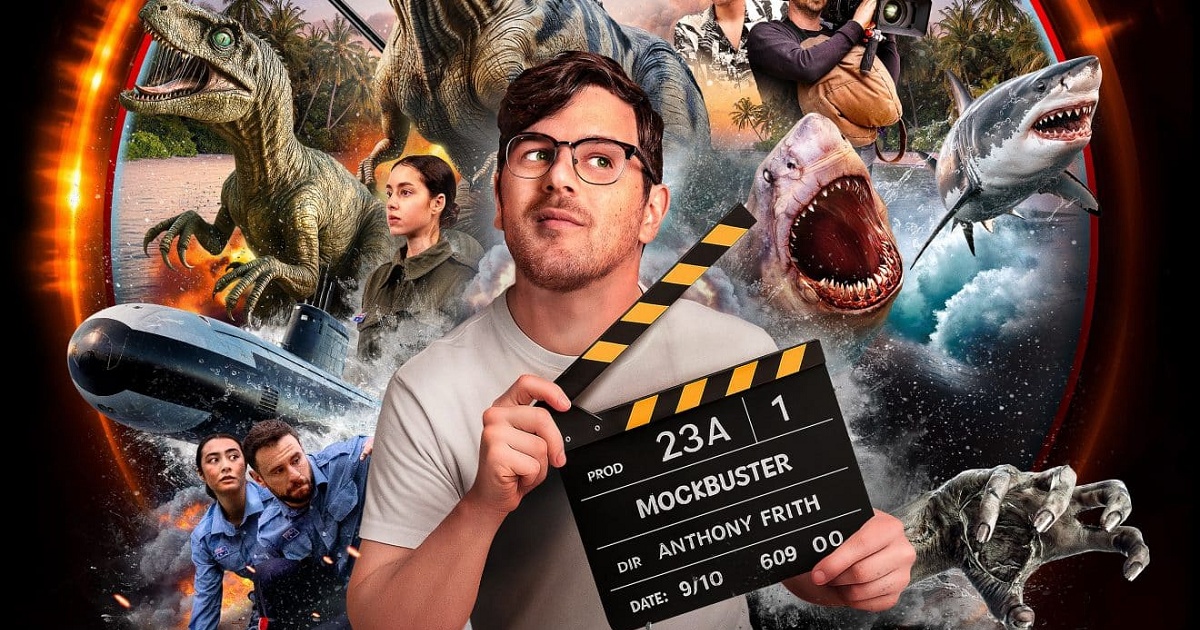
Mockbuster Review: For over two decades, The Asylum has become one of Hollywood’s most unusual independent film studios. While major studios spend hundreds of millions creating blockbuster spectacles, The Asylum has mastered the art of producing films quickly, cheaply, and often controversially. Their movies—commonly known as mockbusters—capitalize on the popularity of big-budget releases with similar titles, themes, and marketing.
The documentary Mockbuster takes audiences behind the scenes of this remarkable production house, offering an honest, entertaining, and surprisingly inspiring look at how these films are made. Instead of focusing solely on criticism, the documentary highlights the creativity, determination, and business strategy that have kept The Asylum thriving in an industry where many independent studios fail.
Whether you’re a filmmaker, movie enthusiast, or simply curious about Hollywood’s hidden corners, Mockbuster provides an engaging exploration of filmmaking under extraordinary constraints.
What Is a Mockbuster?
Before diving into the documentary, it’s important to understand the concept behind mockbusters.
A mockbuster is a low-budget film released around the same time as a major Hollywood blockbuster. These films often feature titles that resemble popular movies, encouraging curious viewers to give them a chance.
Some well-known examples include:
- Transmorphers
- Atlantic Rim
- Snakes on a Train
- Paranormal Entity
- Almighty Thor
Although these films frequently receive criticism for their similarities to mainstream movies, they have carved out a profitable niche in the entertainment industry.
The documentary explores how this strategy evolved and why it continues to work despite changing viewing habits.
Inside The Asylum
Founded in 1997, The Asylum originally produced independent films before discovering that mockbusters generated consistent profits.
Mockbuster interviews producers, directors, writers, editors, actors, and crew members who explain how the studio operates.
Unlike traditional Hollywood productions that may spend years in development, The Asylum often completes an entire feature film in just a few weeks.
This astonishing speed requires:
- Efficient planning
- Tight shooting schedules
- Multi-skilled crew members
- Rapid editing
- Creative problem-solving
The documentary emphasizes that these productions are not chaotic accidents—they are carefully organized operations designed to maximize every dollar.
A Different Definition of Success
One of the documentary’s strongest themes is redefining success.
Hollywood typically measures success through:
- Massive box office numbers
- Academy Awards
- Celebrity casts
- Critical acclaim
The Asylum measures success differently.
Their goals include:
- Completing films on time
- Staying within budget
- Delivering entertainment
- Maintaining profitability
- Releasing content consistently
The documentary argues that while their movies may never compete with Marvel or Disney productions, they succeed remarkably well within their own business model.
Filmmaking Under Pressure
Perhaps the most fascinating aspect of Mockbuster is watching filmmakers overcome constant limitations.
The documentary showcases how directors adapt scenes when:
- Locations become unavailable
- Weather changes unexpectedly
- Equipment fails
- Budgets run out
- Time disappears
Rather than stopping production, crews continually find inventive solutions.
This flexibility becomes one of the documentary’s most inspiring lessons.
Many Hollywood productions solve problems by spending more money.
The Asylum solves problems by thinking differently.
The Creative Process
Despite their reputation, The Asylum’s creative teams display genuine passion for filmmaking.
The documentary follows:
- Script development
- Casting decisions
- Costume creation
- Practical effects
- Visual effects
- Editing
- Sound design
Viewers quickly realize that every crew member wears multiple hats.
An editor may assist with visual effects.
A producer may help transport equipment.
Actors may perform their own stunts.
This collaborative spirit creates an energetic production environment rarely seen in larger studio systems.
Special Effects on a Shoestring Budget
Visual effects represent one of the documentary’s most entertaining sections.
Rather than hiding their limitations, the filmmakers openly discuss how they create giant monsters, disasters, explosions, and fantasy creatures using extremely limited resources.
Instead of expensive motion-capture stages or billion-dollar rendering farms, artists rely on:
- Affordable software
- Clever camera angles
- Practical effects
- Digital compositing
- Tight post-production schedules
The documentary doesn’t pretend these effects rival Hollywood blockbusters.
Instead, it celebrates the ingenuity required to create convincing entertainment with modest budgets.
The Business Behind the Movies
One of the documentary’s greatest strengths is explaining why The Asylum continues producing films year after year.
Many viewers assume mockbusters exist purely to imitate successful movies.
The documentary reveals a much broader strategy.
The studio focuses heavily on:
- Streaming platforms
- Television licensing
- International distribution
- Digital rentals
- Video-on-demand services
These multiple revenue streams allow relatively inexpensive productions to become financially sustainable.
It’s an insightful reminder that filmmaking is both an artistic pursuit and a business.
Interviews That Feel Honest
The interviews throughout Mockbuster avoid becoming promotional.
Participants openly acknowledge:
- Budget limitations
- Critical reviews
- Internet jokes
- Production challenges
Instead of becoming defensive, they discuss these issues with humor and honesty.
Their transparency makes the documentary surprisingly relatable.
Rather than presenting themselves as misunderstood geniuses, they simply explain how they make movies efficiently and why audiences continue watching them.
Humor Plays an Important Role
Although the documentary covers serious filmmaking topics, it never becomes dry.
There are plenty of humorous moments involving:
- Unexpected production disasters
- Last-minute rewrites
- Funny behind-the-scenes stories
- Memorable audience reactions
These lighter moments keep the pacing enjoyable while reminding viewers that filmmaking—even stressful filmmaking—can still be fun.
Lessons for Independent Filmmakers
Perhaps the documentary’s biggest contribution lies in its educational value.
Aspiring filmmakers often believe they need expensive cameras, famous actors, or huge budgets before making movies.
Mockbuster challenges that assumption.
The film demonstrates that determination, organization, and resourcefulness often matter more than unlimited funding.
Key lessons include:
- Finish projects instead of endlessly planning.
- Adapt quickly to unexpected problems.
- Focus on storytelling.
- Work efficiently.
- Build strong teamwork.
- Learn multiple filmmaking skills.
These lessons apply well beyond mockbusters and can benefit any independent creator.
Is The Documentary Biased?
The documentary naturally presents The Asylum in a largely positive light.
However, it doesn’t completely ignore criticism.
It discusses:
- Ethical debates surrounding mockbusters
- Audience misconceptions
- Negative reviews
- Legal challenges
- Public perception
While critics may wish for more opposing viewpoints, the documentary primarily aims to explain—not defend—the studio’s existence.
Production Quality
Ironically, Mockbuster itself is produced with considerably higher polish than many films created by The Asylum.
The documentary features:
- Clean cinematography
- Well-paced editing
- Strong interview structure
- Interesting archival footage
- Effective music
The polished presentation helps maintain audience engagement throughout its runtime.
Who Should Watch It?
This documentary appeals to several different audiences.
Movie lovers will appreciate learning about an unconventional corner of Hollywood.
Independent filmmakers will gain practical production insights.
Film students can better understand low-budget filmmaking techniques.
Business enthusiasts may find the studio’s distribution model particularly interesting.
Even viewers who have never watched a mockbuster may come away with newfound respect for the people behind these productions.
Strengths
The documentary succeeds because it offers:
- Honest behind-the-scenes access
- Fascinating production stories
- Practical filmmaking lessons
- Engaging interviews
- Strong pacing
- Entertaining humor
- Valuable industry insights
Its greatest strength lies in humanizing filmmakers who are often dismissed because of limited budgets.
Weaknesses
The documentary isn’t without flaws.
Some viewers may feel:
- It occasionally avoids deeper criticism.
- More perspectives from film critics would strengthen the discussion.
- Certain production stories deserve additional detail.
- Some interview segments become repetitive.
However, these issues rarely diminish the documentary’s overall effectiveness.
Final Verdict
Mockbuster is far more than a documentary about low-budget imitation films.
It is a compelling exploration of creativity under pressure, entrepreneurial thinking, and the determination required to keep making movies despite limited resources.
By taking audiences inside The Asylum’s filmmaking machine, the documentary reveals that passion, teamwork, and problem-solving often matter just as much as massive budgets.
Whether you admire The Asylum, laugh at its films, or know nothing about the studio, Mockbuster offers an entertaining and surprisingly insightful look at one of independent cinema’s most fascinating success stories.
It reminds viewers that filmmaking isn’t always about perfection—it is often about finishing the story, reaching an audience, and continuing to create against all odds.
The Review
Review Breakdown
-
Story & Script
-
Direction
-
Acting
-
Cinematography
-
Sound and Music
-
Editing
-
The "It" Factor