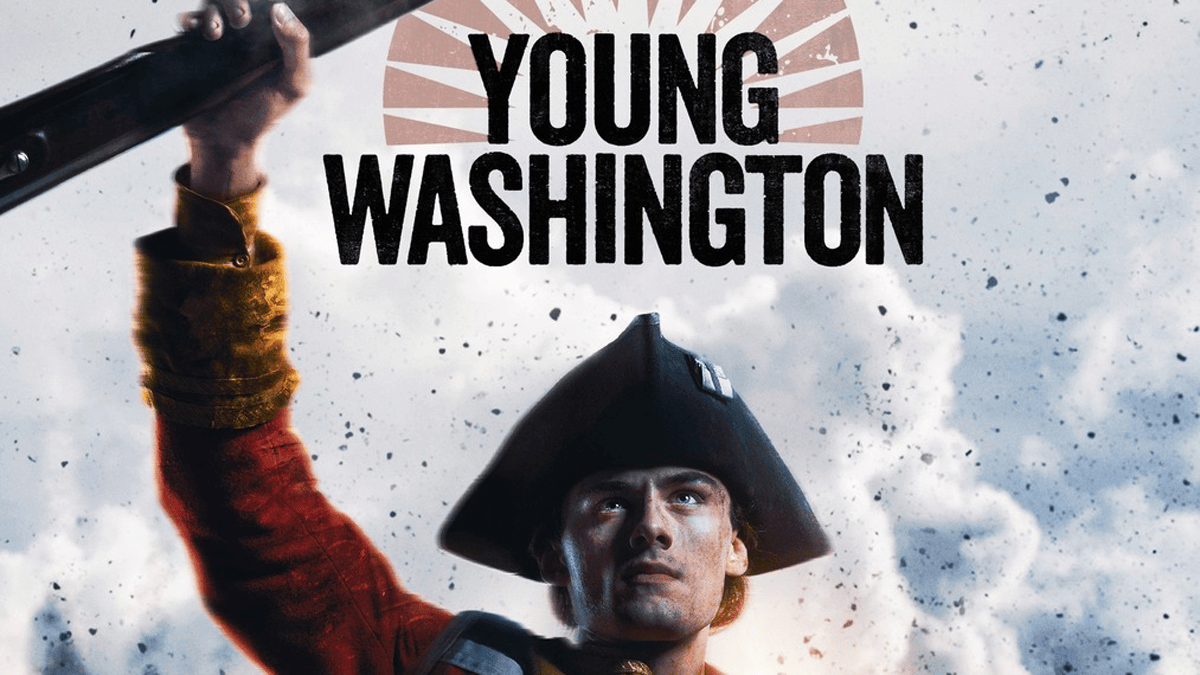
Read our spoiler-free Young Washington review. This historical drama explores the early life of George Washington with beautiful visuals and strong performances, but slow pacing and a predictable script keep it from greatness.
Historical dramas have the power to make audiences see famous figures in a completely new light. The best films don’t simply recreate important moments from history—they explore the emotions, sacrifices, and difficult decisions behind those events. Movies like Lincoln, Darkest Hour, and Oppenheimer succeeded because they transformed historical icons into relatable human beings.
Young Washington sets out with a similarly ambitious goal. Rather than focusing on George Washington as the celebrated Revolutionary War commander or America’s first president, the film takes viewers back to his earliest years, exploring the experiences that shaped one of history’s most influential leaders.
It’s an intriguing concept, and one that feels surprisingly fresh. Unfortunately, while Young Washington deserves praise for its historical authenticity, beautiful cinematography, and sincere performances, it never becomes the emotionally gripping historical epic it wants to be. Instead, the film often feels more like an educational history lesson than a compelling piece of cinema.
For viewers passionate about American history, there is plenty to admire. For everyone else, the experience may feel respectful but ultimately forgettable.
A Different Look at George Young Washington Story
Unlike many historical films that begin during the American Revolution, Young Washington explores the years before George Washington became a national hero.
The story follows a young Washington as he learns the responsibilities of military leadership, faces political challenges, builds important relationships, and gradually develops the qualities that would later define his legacy.
This approach immediately separates the movie from traditional presidential biopics.
Rather than portraying an already legendary leader, the film presents someone still making mistakes, learning from failure, and discovering what true leadership really means.
That perspective gives Young Washington genuine dramatic potential.
Instead of focusing on famous speeches or iconic battles, the screenplay attempts to reveal how ordinary experiences shaped an extraordinary individual.
The Lead Performance Keeps the Story Grounded
The strongest element of Young Washington is undoubtedly its lead actor.
Playing one of the most recognizable figures in American history is never an easy task, but the performance strikes an impressive balance between confidence and vulnerability.
Rather than attempting to imitate the older George Washington familiar from portraits and history books, the actor creates a believable younger version who still has much to learn.
His quiet determination makes the character feel authentic.
Whether leading soldiers through dangerous territory or navigating complicated political conversations, he consistently delivers a performance filled with dignity and restraint.
Even during slower scenes, his presence keeps the audience invested.
Without such a committed performance, the film’s pacing issues would become far more noticeable.
Beautiful Cinematography Brings Colonial America to Life
Visually, Young Washington is an impressive achievement.
From sweeping forests and rivers to carefully recreated colonial settlements, the movie captures eighteenth-century America with remarkable attention to detail.
Natural lighting dominates many scenes, giving the landscapes a timeless quality.
Wide shots emphasize the vast wilderness that early settlers encountered, while intimate indoor sequences recreate colonial homes, military headquarters, and government buildings with convincing realism.
The production design deserves equal praise.
Everything from military uniforms and weapons to furniture, architecture, and costumes reflects extensive historical research.
For viewers who appreciate period dramas, the visual craftsmanship alone makes the movie worth watching.
A Story That Prioritizes History Over Drama
While the production values are consistently impressive, the screenplay doesn’t always match the quality of the visuals.
The movie clearly wants to educate audiences about Washington’s formative years.
Unfortunately, this educational focus often comes at the expense of compelling storytelling.
Many scenes consist of lengthy conversations about politics, military strategy, responsibility, and leadership.
Although these discussions are historically informative, they rarely generate emotional tension.
Instead of allowing conflicts to unfold naturally, the screenplay frequently explains historical events through dialogue.
As a result, several important moments feel more like history lectures than dramatic scenes.
Viewers looking for an emotionally powerful character study may find themselves wishing the film took greater creative risks.
The Film Plays It Too Safe
One of Young Washington’s biggest weaknesses is its unwillingness to challenge its central character.
The filmmakers clearly admire George Washington, and that admiration is evident throughout the film.
Nearly every scene reinforces his courage, integrity, discipline, and leadership.
While those qualities are certainly part of his historical legacy, the screenplay rarely explores his flaws with equal depth.
Great historical dramas often embrace complexity.
They remind audiences that even history’s greatest leaders struggled with fear, doubt, and personal failure.
Young Washington acknowledges these moments but rarely examines them deeply enough to create lasting emotional impact.
Instead, Washington often feels like an idealized symbol rather than a fully realized human being.
Supporting Characters Never Fully Develop
Another area where the movie falls short is its supporting cast.
Several important historical figures appear throughout Washington’s journey.
Unfortunately, many receive minimal development.
Mentors, military officers, political allies, and family members frequently exist only to guide Washington toward his destiny.
Very few become memorable characters in their own right.
This lack of character depth weakens several emotional scenes.
Relationships that should carry significant dramatic weight often feel surprisingly distant.
Had the supporting cast received greater attention, Washington’s personal growth would have become much more compelling.
The Battle Sequences Feel Authentic
Although Young Washington is primarily a character-driven drama, it includes several military sequences that deserve recognition.
Rather than relying on large-scale Hollywood spectacle, the battles emphasize realism and tactical decision-making.
The filmmakers focus on strategy, discipline, and leadership rather than nonstop action.
This grounded approach feels appropriate for the story being told.
History enthusiasts will likely appreciate the attention devoted to authentic military formations, uniforms, and battlefield conditions.
The action scenes may not be explosive, but they effectively demonstrate Washington’s gradual development as a commander.
Strong Music Elevates the Emotional Moments
The orchestral score quietly enhances the film without overwhelming it.
Patriotic themes appear throughout the soundtrack, but the music never becomes excessively sentimental.
Instead, it supports moments of reflection, personal growth, and quiet determination.
Several emotional scenes gain considerable power through the restrained musical composition.
Combined with the beautiful cinematography, the score helps create an immersive historical atmosphere.
Pacing Holds the Film Back
The biggest obstacle preventing Young Washington from becoming a truly memorable historical drama is its pacing.
The opening act effectively establishes Washington’s ambitions and introduces the world around him.
The middle portion, however, slows considerably.
Several conversations repeat similar ideas about leadership, honor, and responsibility.
While these themes remain central to Washington’s character, they don’t always advance the narrative.
A tighter edit could easily remove several repetitive scenes without sacrificing historical context.
Instead, the film occasionally mistakes slow pacing for dramatic importance.
This becomes especially noticeable during the second act, where momentum nearly disappears before returning for the conclusion.
A Respectful Celebration of Leadership
Despite its shortcomings, Young Washington remains a sincere and respectful tribute to one of America’s most influential historical figures.
The movie consistently emphasizes values like integrity, perseverance, humility, sacrifice, and service.
Its message is clear.
Great leaders are not born—they are shaped through difficult choices and personal responsibility.
That uplifting perspective gives the film emotional sincerity, even when its storytelling becomes conventional.
Audiences interested in biographies and historical education will likely appreciate this approach.
Those seeking a more emotionally complex character study may leave somewhat disappointed.
Is Young Washington Worth Watching?
The answer depends largely on what you’re expecting.
If you’re looking for a fast-paced historical epic filled with dramatic twists and unforgettable emotional moments, Young Washington probably won’t satisfy.
However, if you enjoy thoughtful period dramas, historical biographies, and films that prioritize authenticity over spectacle, there’s plenty here to appreciate.
Its outstanding production design, beautiful cinematography, and dependable lead performance make it an enjoyable watch for history lovers.
It simply never reaches the greatness suggested by its fascinating subject.
Final Verdict
Young Washington is a respectful, beautifully crafted historical drama that offers an interesting look at the early years of America’s first president. The film excels in recreating colonial America through gorgeous cinematography, authentic production design, and a strong central performance.
Unfortunately, its slow pacing, cautious storytelling, underdeveloped supporting characters, and emotionally restrained screenplay prevent it from becoming one of the great historical biopics.
It succeeds as an educational portrait of George Washington’s formative years but struggles to deliver the dramatic intensity needed to leave a lasting cinematic impression.
For history enthusiasts, it’s worth watching.
For general audiences, it may prove more admirable than unforgettable.
Frequently Asked Questions (FAQ)
Is Young Washington based on a true story?
Yes. The film is inspired by the early life of George Washington and dramatizes key events that helped shape his leadership before he became the first President of the United States.
Is Young Washington worth watching?
If you enjoy historical dramas, biographies, and American history, the film offers beautiful visuals and a strong lead performance. Those expecting an action-packed historical epic may find it too slow.
Is Young Washington historically accurate?
The film appears to stay faithful to major historical events while taking minor dramatic liberties, a common practice in historical biopics.
Does Young Washington have action scenes?
Yes, but the action is limited. The movie focuses more on Washington’s personal growth and leadership than on large-scale battles.
What are the strengths of Young Washington?
- Excellent cinematography
- Authentic colonial-era production design
- Strong lead performance
- Historically respectful storytelling
- Beautiful orchestral score
What are the weaknesses of Young Washington?
- Slow pacing
- Predictable screenplay
- Underdeveloped supporting characters
- Limited emotional depth
- Dialogue-heavy second act
Who should watch Young Washington?
Fans of historical dramas, period films, biographies, and American history will likely enjoy the movie more than viewers looking for fast-paced entertainment.
The Review
Review Breakdown
-
Story & Script
-
Direction
-
Acting
-
Cinematography
-
Sound and Music
-
Editing
-
The "It" Factor