




Moana review: Disney’s live-action remake delivers stunning visuals and impressive performances but struggles to capture the charm, emotion, and magic that made the original an animated classic. Read our detailed spoiler-free review.
Disney has spent the last several years revisiting its beloved animated classics through live-action adaptations. Some have managed to offer fresh perspectives while honoring the originals, while others have simply recreated familiar moments without adding anything meaningful. Unfortunately, Moana falls into the latter category. Although visually impressive and filled with talented performers, the live-action remake rarely finds its own identity, resulting in a film that feels more like an expensive imitation than a magical reimagining.
The original Moana became an instant Disney classic thanks to its heartfelt storytelling, memorable songs, lovable characters, and a deeply emotional journey about identity, courage, and family. It balanced humor, adventure, mythology, and emotional depth in a way that resonated with audiences of all ages. Expectations for the live-action version were naturally high. Fans hoped the remake would expand the Polynesian world, deepen character relationships, and perhaps explore new aspects of the story.
Instead, viewers receive a film that follows the animated original almost scene for scene.
That familiarity isn’t necessarily a problem on its own. Many successful remakes stay close to the source material while adding emotional depth or visual innovation. However, Moana rarely goes beyond simply recreating what audiences have already seen, making the entire experience feel strangely predictable despite its breathtaking production values.
One of the film’s greatest strengths is undoubtedly its visual presentation. Every ocean wave, tropical island, lush forest, and glowing night sky has been crafted with remarkable attention to detail. The filmmakers clearly invested heavily in creating a realistic version of the Pacific Islands, and the environments often look spectacular on the big screen.
The cinematography captures the beauty of the ocean with sweeping wide shots that emphasize both its mystery and magnificence. Sunsets paint the horizon in vibrant shades of orange and pink, while underwater sequences shimmer with lifelike textures and dazzling colors. Visually, this is one of Disney’s most impressive live-action productions.
Costume design also deserves praise. Traditional Polynesian clothing has been recreated with care and authenticity, while the cultural inspirations remain respectfully represented throughout the film. Small visual details help preserve the identity that made the original story so distinctive.
The performances are another positive aspect.
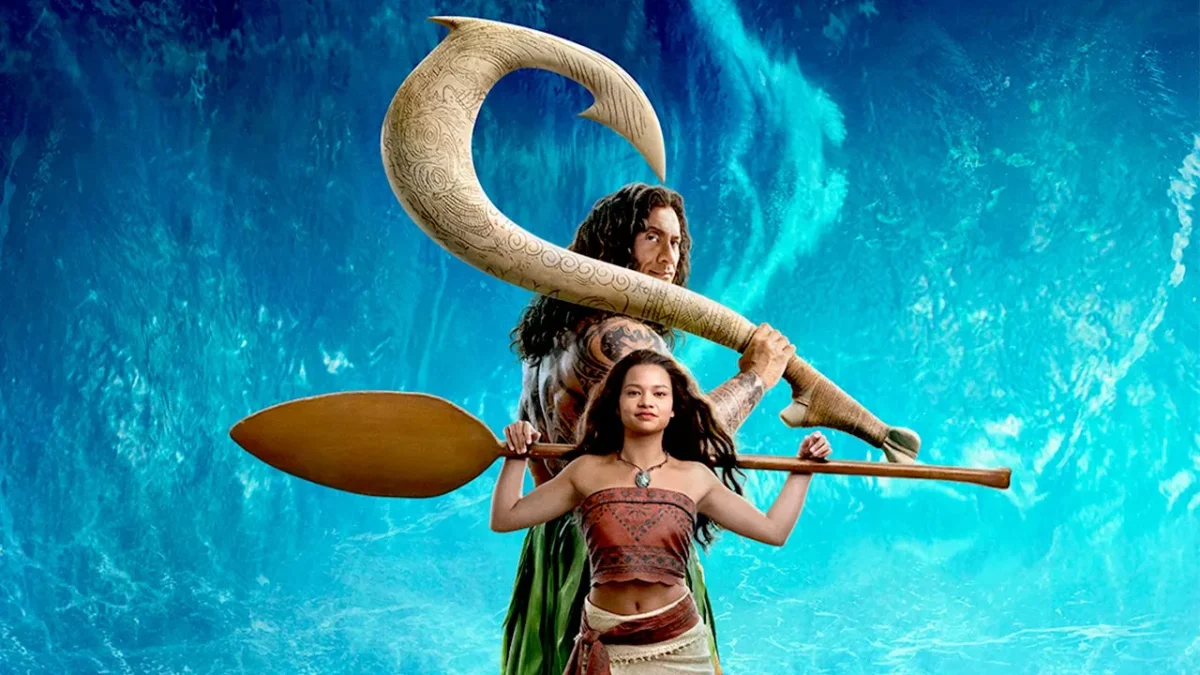
The actress portraying Moana brings sincerity, confidence, and determination to the role. She successfully captures the adventurous spirit that made the animated heroine so beloved. Her emotional moments feel genuine, and she carries much of the film’s emotional weight with quiet strength.
Dwayne Johnson once again steps into the role of Maui, bringing his trademark charisma and humor. His larger-than-life personality naturally suits the demigod, and many of the film’s funniest moments come from his interactions with Moana. While his performance remains entertaining, even Johnson struggles against a screenplay that rarely allows the character to evolve beyond what audiences already know.
The chemistry between Moana and Maui remains enjoyable, but it lacks the spark and gradual emotional development that made their animated relationship so memorable. Their friendship feels rushed because the film spends so much time recreating familiar scenes rather than building new emotional connections.
Perhaps the biggest disappointment lies in the screenplay itself.
Rather than reimagining the story for a live-action audience, the writers appear determined to reproduce the animated film almost beat for beat. Iconic scenes return with only minor adjustments, beloved dialogue is repeated nearly word for word, and major emotional moments unfold exactly as expected.
As a result, there is very little sense of discovery.
Audiences who know the original will often find themselves anticipating every conversation, every musical number, and every dramatic reveal long before it happens. Instead of feeling nostalgic, the experience gradually becomes repetitive.
Moana: This raises an important question that many viewers may ask after leaving the theater:
Why remake a nearly perfect animated movie if the new version has so little to say?
The original film still exists and continues to deliver a richer emotional experience. Without meaningful changes or expanded storytelling, the remake struggles to justify its own existence.
The pacing also suffers because of this approach.
The animated version maintained a perfect rhythm, balancing emotional moments with comedy and action. The live-action adaptation occasionally feels slower, especially during scenes that are simply extended recreations of familiar events. Moments that once felt energetic now sometimes seem drawn out, making the adventure feel less exciting than before.
The musical sequences present another mixed result.
The original soundtrack became one of Disney’s most successful collections of songs in recent memory. Tracks like “How Far I’ll Go” and “You’re Welcome” quickly became fan favorites because they combined catchy melodies with emotional storytelling.
The live-action versions remain faithful to the originals but rarely surpass them.
The performances are strong, and the orchestral arrangements are beautifully produced, yet some songs lose the vibrant energy that animation naturally provided. The emotional impact is still present, but the magic feels slightly diminished. Rather than feeling like fresh interpretations, many songs resemble polished cover versions of beloved classics.
Humor has also taken a noticeable hit.
The animated film embraced playful visual comedy that worked perfectly within its colorful world. Translating those moments into live action proves more difficult. Some jokes still land, largely thanks to Dwayne Johnson’s comedic timing, but many comedic sequences feel restrained compared to their animated counterparts.
The emotional core remains intact to a certain degree.
Moana’s relationship with her grandmother continues to deliver touching moments, while the themes of embracing one’s destiny and respecting cultural heritage remain as relevant as ever. These universal messages still resonate because they were already powerful in the original story.
However, emotional scenes often feel less impactful simply because audiences know exactly what’s coming. The surprise, wonder, and gradual emotional build-up have largely disappeared.
One area where the film deserves genuine appreciation is its continued respect for Polynesian culture. Disney again collaborated with cultural advisors to ensure traditions, mythology, language, and visual elements were represented thoughtfully. The story continues celebrating Pacific Island heritage with warmth and admiration rather than reducing it to simple fantasy.
That cultural authenticity remains one of the franchise’s greatest strengths and helps distinguish Moana from many other Disney adventures.
The visual effects surrounding Te Kā, Te Fiti, and the ocean itself are consistently impressive. The ocean retains its personality through subtle animation and CGI work, creating moments that still inspire childlike wonder. Creature designs look realistic without abandoning their mythical origins, and large-scale action sequences benefit from modern visual technology.
Ironically, these technological improvements highlight the remake’s greatest weakness.
Everything looks bigger.
Everything looks more realistic.
But very little feels more magical.
Animation allowed the original Moana to express emotion through exaggerated movement, vibrant colors, and imaginative visual storytelling. Live action naturally limits some of that expressive freedom, making certain emotional moments feel less dynamic than before.
The film ultimately becomes a fascinating example of technical excellence failing to create emotional necessity.
It is difficult to criticize the craftsmanship. The production design, CGI, cinematography, costumes, performances, and music are all professionally executed. Everyone involved clearly cared about creating a beautiful film.
Yet audiences rarely remember movies solely because they looked expensive.
They remember how those films made them feel.
The animated Moana inspired viewers with its sense of adventure, unforgettable songs, heartfelt relationships, and genuine emotional power. The live-action adaptation recreates those ingredients without fully capturing the emotional chemistry that made them work in the first place.
For younger audiences who have never seen the animated version, this remake may still provide an enjoyable family adventure filled with memorable music and positive messages. New viewers are likely to appreciate its stunning visuals and inspirational heroine.
Longtime fans, however, may find themselves constantly comparing each scene with the original—and those comparisons rarely favor the remake.
Disney’s growing collection of live-action remakes continues to spark debate about creativity versus nostalgia. While revisiting beloved stories can introduce them to new generations, successful adaptations usually bring fresh ideas, expanded character development, or bold artistic choices.
Moana instead chooses familiarity over innovation.
The result is a polished, respectful, and technically accomplished film that rarely surprises, challenges, or improves upon the classic that inspired it.
In the end, Disney’s live-action Moana is far from a bad movie. It is entertaining, visually stunning, culturally respectful, and anchored by committed performances. Yet it struggles to escape the enormous shadow cast by its animated predecessor.
For all its spectacular visuals and blockbuster scale, the remake never quite recaptures the emotional wonder, infectious charm, and timeless magic that made the original one of Disney’s finest modern classics.
If you’ve never experienced Moana, this version offers an enjoyable introduction to its inspiring story. But if you already cherish the animated classic, you may leave the theater feeling that the original still sails far ahead, reminding us that some stories simply don’t need to be remade to remain unforgettable.
-
Performances5
-
Direction5
-
Cinematography4
-
Story & Script4
-
Music & Sound4


